

When the last Newsletter went out (late, like this one) in the middle of April, the scribes noted that the weather had turned a little cooler and wetter, and was more like what April was supposed to be like. Oh, how that observation fell flat on its face. Far from “Rough winds do shake the darling buds of May”, it seems that the darling buds are more likely to be parched as we’ve not had any rain at the Scriptorium for getting on for a month now.


Mrs Pritchett is beside herself with worry that the kitchen garden will suffer and has given instructions for a daily regime of watering to be carried out. The water butt is beginning to run low as the scribes are making regular visits with the watering can to make sure the rhubarb isn’t wilting and there isn’t so much as a hint of rain on the horizon. The scribes have visited the reservoirs to check the levels and can report that they are down on where they are supposed to be.
Works In Progress
With The Scriptorium Chronicle languishing in submission hell and there still being tumbleweed from the agent I sent it too, it’s time to look for someone else’s slush pile for it to be buried on and ignored. Whoever said that patience is a virtue clearly never had to deal with literary agents or publishers.
The Scriptorium Cookbook is more or less finished, at least in first draft form. A couple more recipes were found (or to be more accurate, not found) and are being written up for inclusion. Work on illustrations is patchy as I keep forgetting to take pictures when something is cooked. The exception to this is bread, of which it seems that every loaf is photographed. Some of the recipes have been distributed for testing by fellow writers with an interest in cooking, and I await their comments with interest. Indigestion tablets were not supplied.
With Scriptorium related writings out of the way for now, attention has turned back to Pass The Duchy. The machete editing had been going well, until life got in the way of writing and attention had to be put on getting the garden straight for summer. The hard work is now more or less done so at present it’s a matter of keeping on top of everything. This means that the machete edit has resumed. I made the decision to break apart the last three chapters for an overhaul. The final chapter, which is more of a gentle wrap up, was fine but the two preceding it seemed rushed. The pacing to build up to a climactic ending was off and the grand finale seemed to come out of nowhere as a result. The new content that I’m putting in should make the build up happen more naturally and it also wraps up some loose ends. The only problem is that it is taking an age to write the thing as rather than throw a lot down and edit it afterwards, I’m agonising over every word and sentence to get it right. It’s not like I don’t know what I need to put in. It isn’t avoiding writing either. This is something new. It is complicated by having a cut finger (long story involving being stung by a nettle while holding a recently sharpened Japanese weeding knife), which means that I can’t feel the index key on the keyboard through the sticking plaster so typing isn’t straightforward. When I finish this Newsletter I promise that I’ll get back to the Duchy and finish it off, even if I have to fight it every inch of the way.

The Wildflower Meadow (formerly the Front Lawn)
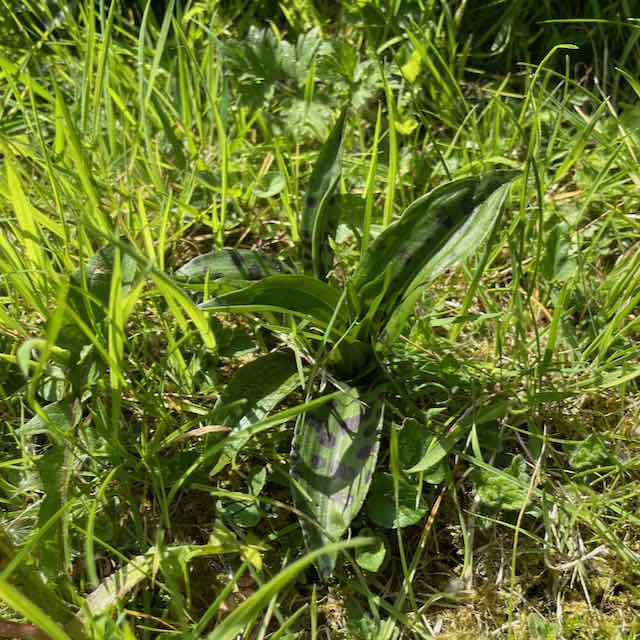
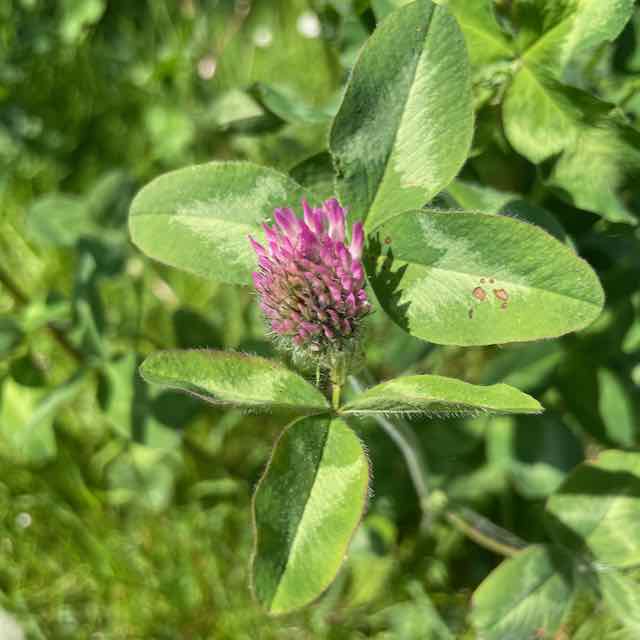
With No Mow May in full swing, the scribes are delighted to report that the spotted orchids are not only back, but have multiplied. The first to have shown up, some three years ago now, has divided itself. The red clover sown last year is about to flower. Germander speedwell is creeping through the grass adding dots of deep blue as it goes. It would appear that the evening primrose, beloved by elephant hawk moths, is back too. Other plants, as yet unidentified, are popping up as well. The scribes will report on these next month once they have found out what they are.
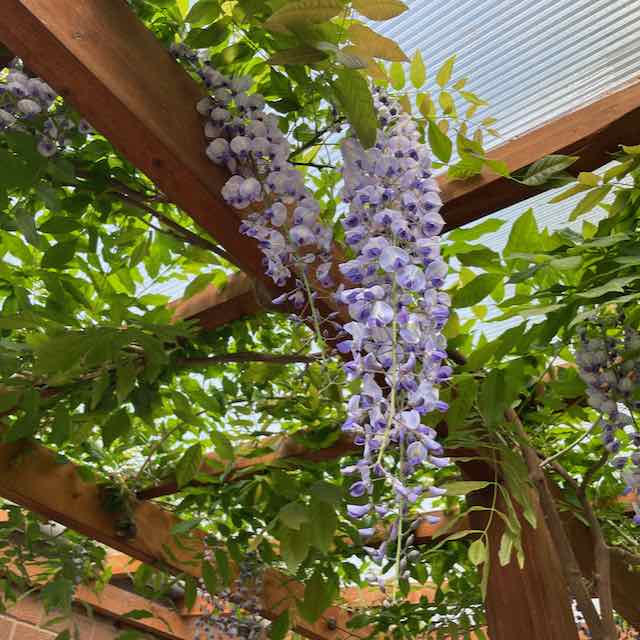
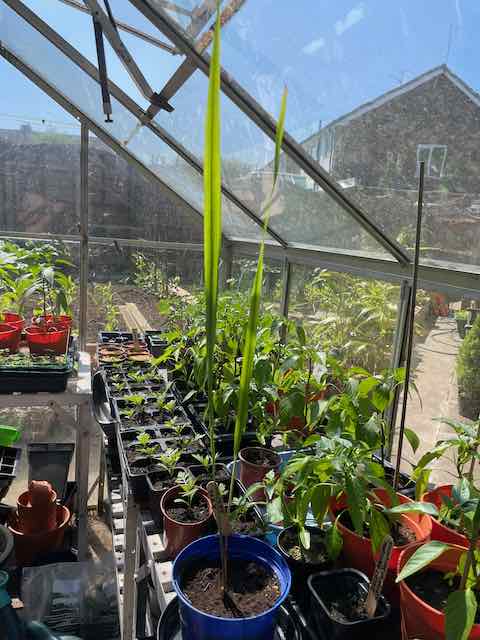
In the greenhouse, the hot chilli peppers grown from seeds saved from the Christmas Eve rendang are starting to fruit. The milder chillis (which look exactly the same) are further behind, despite being sown at the same time, and have yet to flower. The various tomato plants are coming along nicely. On the veranda, the harsh pruning the wisteria received last year is paying off as there are the most flowers it has ever had in bloom. The scent is exquisite.

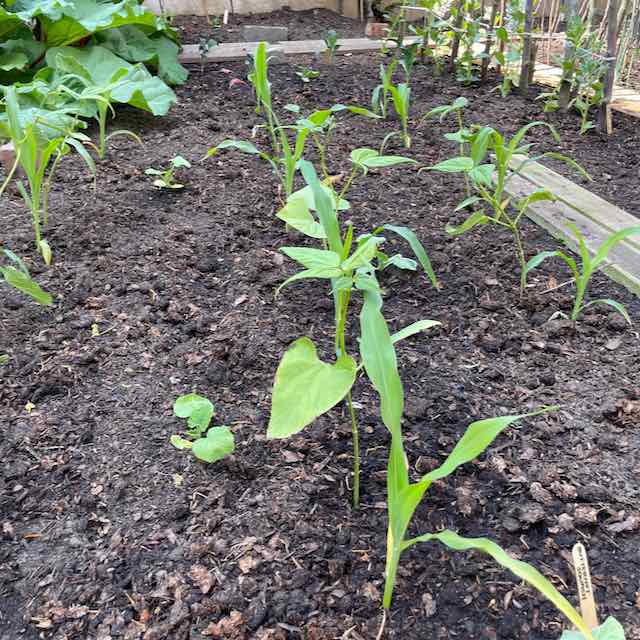
In the kitchen garden, the scribes are experimenting with something called Three Sisters planting. This originated in Mesoamerica and it works like this: sweetcorn is planted alongside climbing beans. The sweetcorn provides something for the beans to climb up, while the beans fix nitrogen in the soil for the sweetcorn to use. Squash is sown inbetween them to shade out weeds and keep the moisture in the soil so that everything benefits. Different indigenous cultures used different varieties of maize, beans and squash, but the principle was the same. However, it would appear that timing is the key to doing this right as the maize needs to be tall enough for the beans to climb up. At the present rate, the sweetcorn needs to get growing fast so that the beans don’t outstrip them.
The mystery seed found in a packet of peacock orchids and planted remains a mystery. Various suggestions have been put forward about what it might be and one by one these have been discounted. The usual reason is because the seed of the suggested plant is nowhere near like what was planted. The current contender is tentatively put at being sweet flag (Acorus calamus), and looking at photos the leaf, seems about right. Whether it is sweet flag remains to be seen. Watch this space for any developments.
What The Scribes Have Been Reading And Watching
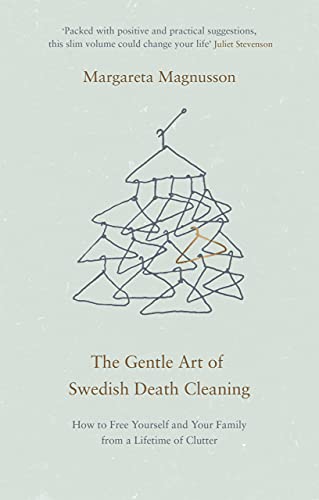
Since the last Newsletter, I’ve finished another book: The Gentle Art of Swedish Death Cleaning. Subtitled “How to Free Yourself and Your Family from a Lifetime of Clutter”, it is a warmly written guide to how to let go of all the stuff that builds up over a lifetime. Some of that stuff you may well want to keep as you’re still alive and need it, but as for the rest, this is where this book comes in. The title may seem gloom laden—it does have death in it after all—but if anything, it’s an affirmation of life. In essence, it’s about not holding on to things, and some practical guidance for how to let it go.

Following on from last month’s A Space Traveller’s Guide to the Solar System by Mark Thompson, I’m reading The Secret Lives of Planets by Paul Murdin. Rather than whizzing around in a pretend rocket, this is a deeper look at each of the planets and why they are the way they are. It has given me a deeper understanding of how teensy differences, such as a planet being 5cm further along in its orbit, can have such a profound effect over really long periods of time. It also explains why weather forecasting is so hard the further ahead you look.
Meanwhile on telly, I’m plodding along with The 100 and am now up to season 3. A lot has happened with the juvenile delinquents sent to Earth to see if it is now habitable, nearly ten decades after a nuclear war. The reason I say plodding is that there’s something about it I can’t quite put my finger on.

It isn’t bad as this sort of thing goes, but there’s something about it that doesn’t compel me to binge watch it. I’ll stay with it to see how it turns out as it has its moments. We’ve gone from a cross between Lord of the Fliesmeets Lost In Space to a sort of post-apocalyptic Game of Thrones, so who knows where we’ll end up.

Dear Alexa,
A friend of mine who goes to a different priory was wondering how best to remove an ink stain from a priceless tapestry before the prior finds out.
Terrified Tapestry Tainter
Dear Terrified Tapestry Tainter,
There are several ways to remove ink stains from fabrics. The easiest and most straightforward of these is for your friend to give a brown envelope filled with unmarked, non-sequential banknotes to your friend’s scullery maid and ask her very nicely if she will take care of it for him, no question asked. I think you will find that the stain will be gone before the prior is any the wiser.
Alexa

Greek Salad
Greek salad, or horiatiki as it is known in Greece, is typically made with tomato, cucumber, onion, feta cheese and olives (usually Kalamata olives) and dressed with salt, oregano, lemon juice and olive oil. That’s it really. I needn’t bother with writing the rest of this recipe. However, Mrs Pritchett insists that quantities and directions are written down so here goes.
Serves 2
Prep time: 10 mins
Cook time: None
Ready: 10 minutes
Ingredients
2 large ripe tomatoes, chopped into bite-sized chunks
½ cucumber, cut into bite-sized chunks
½ small red onion, sliced thinly
Sea salt and ground black pepper, to taste
100g feta cheese, drained and cut into cubes
50g black olives, pitted and drained (use olives in brine, not oil, and Kalamata olives for preference)
½ tsp dried oregano
2 tsp lemon juice
2 tsp extra virgin olive oil
Directions
1. Put everything apart from the oil and lemon juice in a bowl and mix.
2. Drizzle over the oil and lemon juice.
Serve with warmed pitta bread or as a side dish.
Scribes’ Note:
Horiatiki is served with a slab of feta on top instead of cubed and mixed in. On the Cyclades islands, they include capers or green sweet pepper. Lettuce is never one of the ingredients, whichever part of Greece you are in. In one place, they insist on peeling the cucumber, but the scribes can’t remember which island they were on at the time.
 Mark Weaver