

Another month, another newsletter, and this one’s almost on time (give or take a week or so). If you want the TL;DR version, Pass The Duchy is finished and on submission and work has re-recommenced on The Flipside Of Somewhen.


There’s plenty more going on, but those are the highlights. I’m glad to have finally finished the massive edit and rewrite of the Duchy, as it seems to have been going on forever. When it came to what to finish next (remember, this year’s New Year’s Resolution was to finish things), it was a choice between All Steamed Up and Flipside. A metaphorical coin was flipped, and Flipside came out heads. In truth, it was because Steamed needs a rethink and a lot of work to get it in shape.
Works In Progress
With Pass The Duchy completed and sent out into the Big Wide World to find an agent to represent it *IF* it is to go down the traditionally published route, I’m already thinking about alternatives. To that end, I’ve mocked up a cover, which hopefully gives a feel for the Duchy. Given the current state of trad publishing and the expectations laid on authors, I’m ready to go down the indie route. In short, unless you’re a celebrity author, you’re pretty much on a hiding to nothing. Book sales do not equate to quality, but how much marketing effort and money is thrown at it. Big celeb name + huge marketing effort = sales. Mid-list authors and newbies are expected to do their own promotion, with little to no support or budget and, as a result, their sales are significantly less. That then raises the question of whether it’s worth the effort, given that I’m not a celeb and unlikely to get the support. If I’m going to have to do my own marketing anyway, what’s the purpose or value in going trad?
Having used Kindle Direct Publishing for previous books, I’m now looking at how to break out of the Amazon ecosystem to go wide and be less reliant on one provider. There are other print-on-demand publishers out there, and I’m looking at these as there are pros and cons with each. A lot of it is to do with their reach and issues with exclusivity. Throw digital publishing into the mix and it gets complicated. I’m going to have to do a lot of research before deciding on a strategy. I’d far rather be writing than messing around with this, but needs must and all that…
So, I mentioned All Steamed Up earlier and have decided to set this aside until I’ve finished The Flipside Of Somewhen. The reason comes down to the amount of work it will take to get them into a fit state to publish. Steamed is going to take a lot because I have to rethink it structurally. As it stands, the feedback from the Famous Literary Competition is that while it opens strongly, it soon gets bogged down as too many characters are introduced too quickly, and in boring ways. One of the golden rules of writing is to never be boring. The thing is, these characters are needed as the story progresses, or rather, stories. There are three running simultaneously through the book. If I refocus on one main character, two of these become sub-plots, and I’m not clear in my mind yet how best to do this. It is going to involve a major rewrite, and that will take time to do. I’m thinking of this as an autumn/winter thing.
That leads neatly to The Flipside Of Somewhen. When I set it aside to do a revamp of Duchy, I’d gone through it and made lots of notes on what needed attention. In terms of a structural edit, it’s mostly done. It just needs a bit of rewriting and then a polish to finish it. When I restarted, I looked at the opening again and didn’t like it. It wasn’t that it was bad or that it set the wrong tone; it’s that I felt it could be better. After staring at the first page for one day solid, I realised that it started in the wrong place. Coming at it from a different direction slightly later, it is so much stronger. As it’s not written in chapters but “iterations” (no spoilers), it’s easier to do it by word count. 3k down, 67k to go.

The Wildflower Meadow (formerly the Front Lawn)
Now we’re in July, it has become apparent that all the effort put into not mowing during #NoMowMay and #NoMowJune has been worth it, but it’s also become apparent that a decision has to be made (and no, it’s not about whether to continue with NoMowAugust: that’s a given).
It’s good that there are a range of plants other than grass that are growing, but some of what is there is getting a bit thuggish. I’m looking at you, buttercups. These will need to be taken in hand to stop them from taking over. Ditto the ox-eye daisies when they become established. No, the decision is about what else to plant in what is becoming a perennial meadow (rather than one filled with annuals). I’ve started a list.
The spotted orchids are now flowering, as is the red clover. The bees seem to be liking it, which is the whole point of turning the lawn over to meadow. A patch of yellow loosestrife has appeared in a nearby flower bed.
The one thing that has been a failure this year is the lack of yellow rattle. This is the second year in a row that it has not grown, so instead of scattering seed, I’m going to have a go at growing it as plant plugs and then transplanting these in spring to see if they do any better. If I can’t get any to germinate, I can buy plant plugs as a fallback. Next year, there will be yellow rattle.


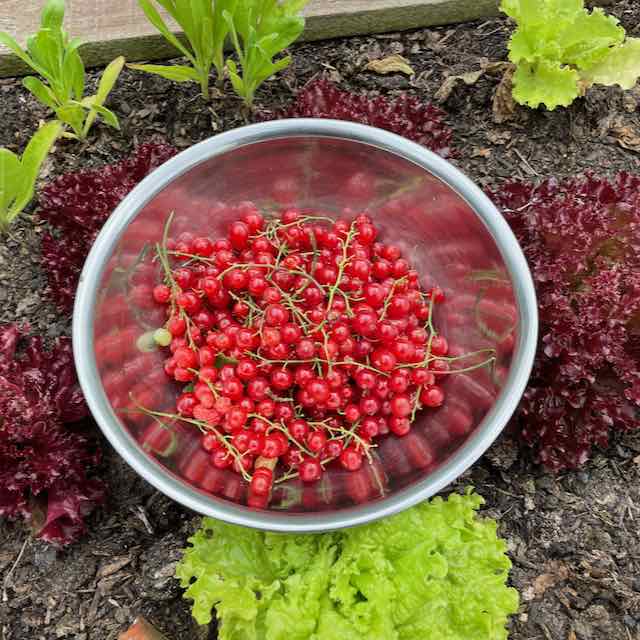
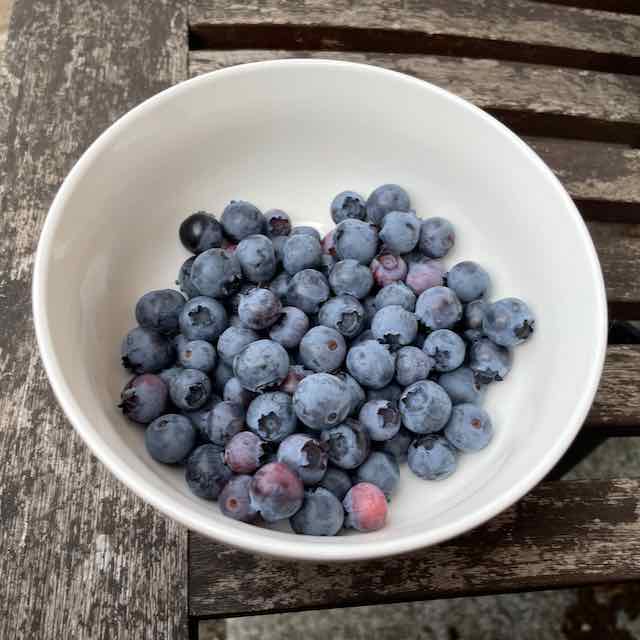
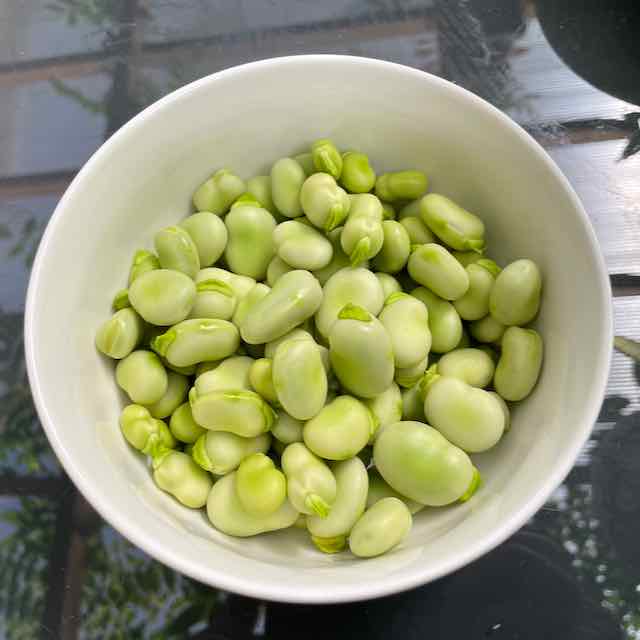
The kitchen garden is in overdrive now that summer is here. The red currants have been harvested, and the nets have been moved to cover the blueberries. The first peas and beans have been picked, and the tomatoes are well on their way to ripening. The sweetcorn is putting on some height, which is good as the French beans are desperate for something to climb up. The carrots have been thinned, and one came out looking rather on the rude side. When it was trimmed, it was unsuitable for family viewing.

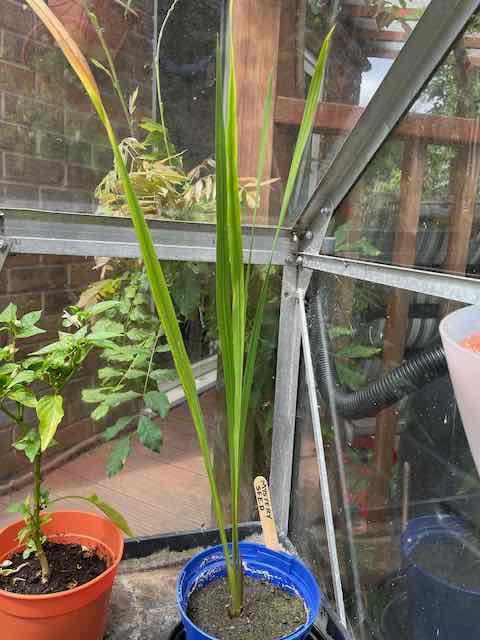
The mysterious seed found in a packet of peacock orchids and planted has been tentatively identified as sweet flag. Whether it is sweet flag remains to be seen (if it ever flowers and sets seed). According to the RHS, it is a bog or pond plant, so I’ve been keeping it more or less waterlogged in the plant pot, and so far it hasn’t died.Now that I’m fairly confident that it isn’t some sort of palm or other exotic, it’s about time it came out of the greenhouse and put outdoors where it is going to live.
What The Scribes Have Been Reading And Watching
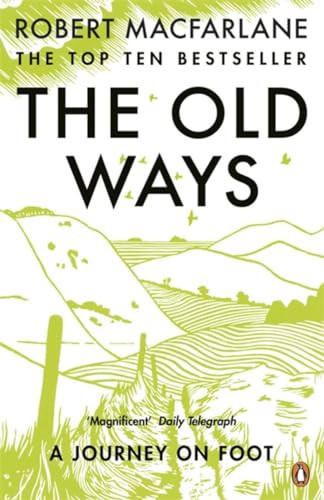
The Old Ways by Robert MacFarlane isn’t necessarily a book I’d have chosen, but after being given a copy, I thought I’d give it a go. Full disclaimer: I haven’t finished it yet. What do I think of it? I haven’t made my mind up yet. There’s no doubting that it is well written, but therein lies the problem: it is overly intellectual to the point of being pretentious. When you look beyond the superficial, what emerges is an author with a great of ability, but with a great deal of unacknowledged privilege to be able to write such a book in the first place. Some of the content is glossed over without awkard questions being asked.
There’s a chapter which involves gannet hunting on a remote Scottish island, which is told in a matter of fact “this happens” way. There’s a chapter with an artist on another Scottish island who keeps a human skeleton bound with mummified meat and is planning to encapsulate it in a block of stone. No mention is made of who the *person* was or what the point of stuffing their skeleton in a lump of gneiss is. Wouldn’t the decent thing be to lay the person to rest in a marked grave? Like I said, it covers dubious ground and dodges the awkward questions. There – I’ve made my mind up. I’m starting to dislike it.
I’ve now finished rewatching Community and have some thoughts: the last season sure took a nosedive in terms of quality when members of the main cast left in seasons 4 and 5. Season 5 limped along. Season 6 should have been buried in block of gniess.
The running joke as the series progressed was that it would be six seasons and a movie. I have mixed feelings about the long awaited movie, which apparently is still a go, but in a holding pattern.

Overall it was worth it for the first few seasons. If there’s a film, meh… we’ll see.

Dear Alexa,
A friend of mine who goes to a different priory wants to know what would happen if someone accidentally forgot to unpack the shopping and when they went to do it, found that the kippers that had been bought were missing and their dog had an evil glint in his eye like he’d either scoffed them or hidden them somewhere.
Worried About The Consequences
Dear Worried About The Consequences,
If the dog in question were anything like our Musky, we all know what happens after he’s eaten kippers. Have your friend fling open all the windows and make sure there is enough air freshener to take care of any flatulence for the next 24 to 48 hours. If the kippers have been hidden, I suggest that your friend invites his colleagues to join him in an emergency game of Hunt The Kipper. Make sure there is plenty of air freshener if the game ends without a successful conclusion.
Alexa

Hummus
Not to be confused with humus (the organic matter in soil), hummus is a savoury dip made from cooked, mashed chickpeas, tahini, lemon juice and garlic. I suppose that if you mixed it up with soil it could count as humus, but this is a cookery column and not an instruction manual for making compost. Now, where was I? Ah, yes. Hummus. The earliest mention of hummus is in a 13th century cookbook attributed to the historian Ibn al-Adim. He didn’t give the recipe, just said that they ate a lot of it in Aleppo, which is where he lived at the time. This is Mrs Pritchett’s sister Dolly’s recipe for hummus, which she got when she went on holiday to Jordan to see the place where they filmed the Indiana Jones movie with Sean Connery in it.
Serves 3-4
Prep time: 10 mins plus overnight soaking
Cook time: 2 hours (or 20 minutes for the shortcut with tinned chickpeas)
Ready: 30 minutes to 2½ hours depending on approach taken
Ingredients
100g dry chickpeas, soaked overnight (or a 400g tin of chickpeas)
1 tsp bicarbonate of soda
75g tahini
2 tbsp fresh lemon juice
2 cloves of garlic, crushed and chopped
2 ice cubes
½ tsp salt
Directions
1. Take the dry chickpeas and soak with plenty of water (500ml) and the bicarbonate of soda in a large bowl overnight. Make sure it’s a large enough bowl as the chickpeas will expand.
2. The next day, drain the chickpeas and place in a medium size saucepan. Cover with water to about 5cm and bring to a boil. Reduce the heat and simmer for 1½ to 2 hours until tender. If you are using a tin of chickpeas, give these a simmer for 20 minutes to help soften them some more. After cooking, retain a little of the cooking water and then drain the chickpeas and allow to cool.
3. Feel free to skip this step, but for really creamy hummus, you need to peel the chickpeas. To do this, take a handful of chickpeas at a time and rub under running water to remove the skins. If you don’t peel the chickpeas, it won’t affect the flavour but it won’t be as creamy. There is no need to keep the skins. Add to the compost bucket for making humus.
4. Whatever you did in the previous step, dry the chickpeas. Whizz all but a few in a blender at high speed until you have a smooth, powder-like paste. Then add the tahini, lemon juice, garlic and ice cubes. Let the blender run for 4 minutes or so until the hummus is silky smooth.
If the consistency is too stiff, add a dash of the retained cooking liqiud to loosen it. If you use too much, or want a thicker consistency, add a little more tahini. Season with the salt to taste.
5. Cover and refrigerate. When you are ready to serve, transfer to a serving dish and add the chickpeas held back in step 4 in the middle. Give it a generous drizzle of extra virgin olive oil and sprinkle some smoked paprika on top.
Hummus is traditionally served as a dip with pitta bread, but crackers, grissini and crudités work just as well.
Scribes’ Note:
There are all sorts of hints and tips to making the best, creamiest, tastiest hummus. These can be boiled down to a few key pointers:
⁃ Use quality tahini and use enough of it. It’s the tahini that gives hummus its rich consistency and subtle nutty flavour.
⁃ Overcooking the chickpeas just a bit and removing the skins makes for a creamier hummus.
⁃ Using a couple of ice cubes makes it fluffier.
⁃ Don’t rush the blender. Give it 4 or 5 minutes to do the job properly.
 Mark Weaver